不依赖UI组件的全局菜单 (openMenu)
菜单控制 (Menu)在使用时依赖绑定UI组件,否则无法使用。从API version 18开始,可以通过使用全局接口openMenu的方式,在无UI组件的场景下直接或封装使用,例如在事件回调中使用或封装后对外提供能力。
弹出菜单
通过openMenu可以弹出菜单。
this.getUIContext().getPromptAction()
  .openMenu(this.contentNode, { id: targetId }, {
    enableArrow: true
  })
  .then(() => {
    hilog.info(0xFF00, 'globalOpenMenu', 'openMenu success');
  })
  .catch((err: BusinessError) => {
    hilog.error(0xFF00, 'globalOpenMenu', 'openMenu error: ' + err.code + ' ' + err.message);
  });
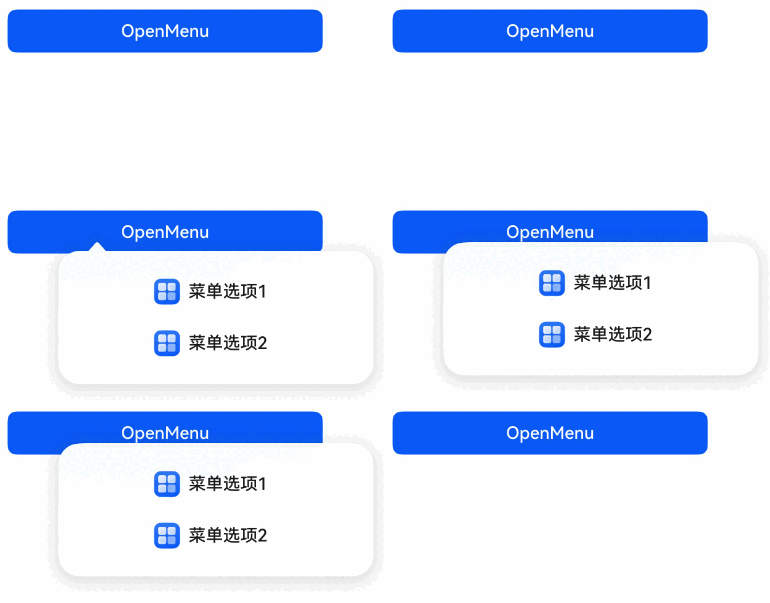
创建ComponentContent
通过调用openMenu接口弹出菜单,需要定义ComponentContent,以提供自定义弹出框的内容。详细规格可参考ComponentContent说明。
private contentNode: ComponentContent<Object> =
  new ComponentContent(this.getUIContext(), wrapBuilder(buildText), this.message);
如果在wrapBuilder中包含其他组件(例如:Popup、Chip组件),则应在创建ComponentContent时设置nestingBuilderSupported属性为true。
@Builder
export function buildText(params: Params) {
  Popup({
    // 类型设置图标内容
    icon: {
      // 请将$r('app.media.app_icon')替换为实际资源文件
      image: $r('app.media.app_icon'),
      width: 32,
      height: 32,
      fillColor: Color.White,
      borderRadius: 10
    } as PopupIconOptions,
    // 设置文字内容
    title: {
      text: `This is a Popup title 1`,
      fontSize: 20,
      fontColor: Color.Black,
      fontWeight: FontWeight.Normal
    } as PopupTextOptions,
    // 设置文字内容
    message: {
      text: `This is a Popup message 1`,
      fontSize: 15,
      fontColor: Color.Black
    } as PopupTextOptions,
    // 设置按钮内容
    buttons: [{
      text: 'confirm',
      action: () => {
        hilog.info(0xFF00, 'globalOpenMenu', 'confirm button click');
      },
      fontSize: 15,
      fontColor: Color.Black,
    },
      {
        text: 'cancel',
        action: () => {
          hilog.info(0xFF00, 'globalOpenMenu', 'cancel button click');
        },
        fontSize: 15,
        fontColor: Color.Black
      },] as [PopupButtonOptions?, PopupButtonOptions?]
  })
}

let contentNode: ComponentContent<Object> =
  new ComponentContent(uiContext, wrapBuilder(buildText), message, { nestingBuilderSupported: true });
绑定组件信息
通过调用openMenu接口弹出菜单,需要提供绑定组件的信息TargetInfo。若未传入有效的target,菜单将无法弹出。
目前有两种设置target的方式。
-
target的id属性设置为number类型,此时需要将id设置为对应组件的UniqueID,组件的UniqueID由系统保证唯一性。
let frameNode: FrameNode | null = this.getUIContext().getFrameNodeByUniqueId(this.getUniqueId());let targetId = frameNode?.getChild(0)?.getUniqueId(); -
target的id属性设置为string类型,此时需要将id设置为对应组件的通用属性id值。当无法保证id的唯一性时,如多团队开发或者复用自定义组件,可以通过设置componentId属性明确指定此id的范围来精确指定target,此时componentId属性可以设置为对应组件的父组件或者所在自定义组件的UniqueID。
build() {NavDestination() {Column() {Row() {Button('button1').id(this.targetIdString)}Row() {Button('button2').id(this.targetIdString)}Button('openMenu').onClick(() => {let frameNode: FrameNode | null = this.uiContext.getFrameNodeByUniqueId(this.getUniqueId());let componentId = frameNode?.getChild(1)?.getChild(0)?.getChild(1)?.getUniqueId();if (componentId == undefined) {this.componentId = 0;} else {this.componentId = componentId;}this.promptAction.openMenu(this.contentNode, { id: this.targetIdString, componentId: this.componentId }, {enableArrow: true}).then(() => {hilog.info(0x0000, 'openMenuWithTargetIdString', 'openMenu success');}).catch((err: BusinessError) => {hilog.error(0x0000, 'openMenuWithTargetIdString', 'openMenu error: ' + err.code + ' ' + err.message);});})}}}
设置弹出菜单样式
通过调用openMenu接口弹出菜单,可以设置MenuOptions中的属性调整菜单样式。title属性不生效。preview参数仅支持设置MenuPreviewMode类型。
private options: MenuOptions = { enableArrow: true, placement: Placement.Bottom };
更新菜单样式
从API version 18开始,通过updateMenu可以更新菜单的样式。支持全量更新和增量更新其菜单样式,不支持更新MenuOptions中的showInSubWindow、preview、previewAnimationOptions、transition、onAppear、aboutToAppear、onDisappear、aboutToDisappear、onWillAppear、onDidAppear、onWillDisappear和onDidDisappear属性。
this.getUIContext().getPromptAction()
  .updateMenu(this.contentNode, {
    enableArrow: false
  }, true)
  .then(() => {
    hilog.info(0xFF00, 'globalOpenMenu', 'updateMenu success');
  })
  .catch((err: BusinessError) => {
    hilog.error(0xFF00, 'globalOpenMenu', 'updateMenu error: ' + err.code + ' ' + err.message);
  });
关闭菜单
从API version 18开始,通过调用closeMenu可以关闭菜单。
this.getUIContext().getPromptAction()
  .closeMenu(this.contentNode)
  .then(() => {
    hilog.info(0xFF00, 'globalOpenMenu', 'closeMenu success');
  })
  .catch((err: BusinessError) => {
    hilog.error(0xFF00, 'globalOpenMenu', 'closeMenu error: ' + err.code + ' ' + err.message);
  });

由于updateMenu和closeMenu依赖content来更新或者关闭指定的菜单,开发者需自行维护传入的content。
在HAR包中使用全局菜单
可以通过HAR包封装一个Menu,从而对外提供菜单的弹出、更新和关闭能力。
具体调用方式参考在HAR包中使用全局气泡提示。